
Westchester County Furnace Repair Services: 2026 Guide

Table of Contents
Emergency Furnace Repair in Westchester County
What Counts as a Heating Emergency
How to Get Same-Day Service
Furnace Troubleshooting Guide: What to Check Before You Call
DIY Troubleshooting Checklist
HVAC Repair Cost Estimates 2026: What Homeowners Should Expect
Typical Repair Ranges by Component
Why Quotes Vary So Much
Repair or Replace? The $5,000 Rule
How to Get a Transparent Quote
Common Furnace Problems and What They Signal
Preventative Maintenance Plans and Energy Rebate Programs
What a Good Maintenance Plan Actually Includes
Energy Rebate Programs: What Actually Exists
How to Stack Incentives Without Getting Burned
Heating System Installation and Boiler Services
How to Choose a Furnace Repair Provider in Westchester County
Questions to Ask Before You Book
Frequently Asked Questions
Last Updated: September 29, 2026
Emergency Furnace Repair in Westchester County
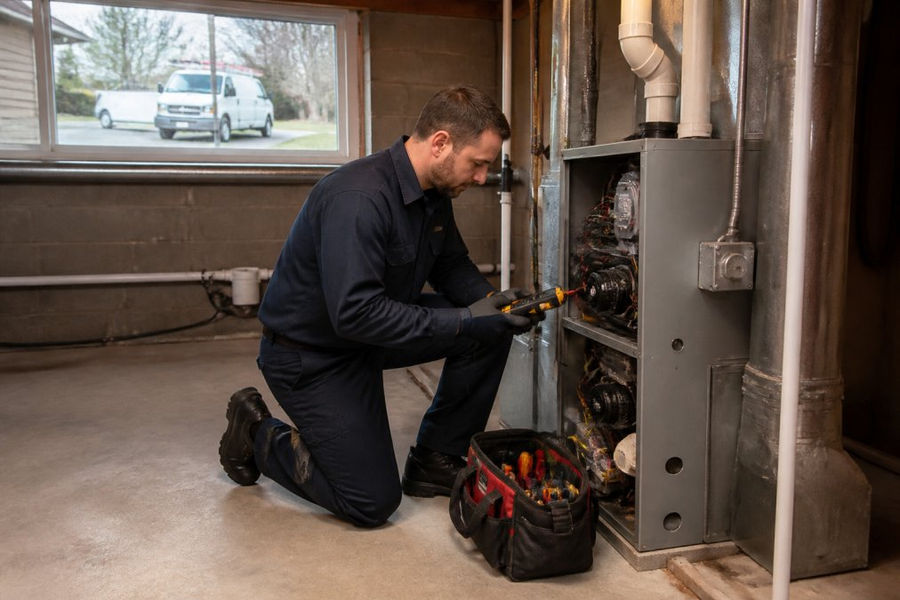
When the heat cuts out in January, every hour matters. Westchester County furnace repair services exist for exactly this moment, and knowing what counts as a true emergency saves you both time and money.
What Counts as a Heating Emergency
No heat at all when outdoor temperatures drop below freezing
A gas odor near the furnace or any fuel line
A carbon monoxide detector sounding
Water pooling around the base of the unit
Repeated breaker trips when the system starts
If you notice a gas smell, leave the house and call your utility's emergency line first. Then call a licensed technician.
How to Get Same-Day Service
Same-day service depends on calling early and describing the problem clearly. When you phone, have your furnace's make, model, and age ready, plus a short description of what you're hearing or smelling. Providers that offer 24/7 availability, like Bamm's HVAC & Plumbing, can often dispatch a technician the same day across Westchester, Putnam, Dutchess, and Fairfield Counties.
Pro Tip Before you call, write down the exact sequence of events: when the heat stopped, what sounds you heard, and whether the thermostat display is blank. Technicians diagnose faster when they know the timeline.
Furnace Troubleshooting Guide: What to Check Before You Call
A furnace troubleshooting guide starts with the simplest checks, and roughly half of "broken furnace" calls turn out to be something a homeowner can fix in five minutes. Work through this list before you dial.
DIY Troubleshooting Checklist
Confirm the thermostat is set to "Heat" and the temperature is above the current room reading
Replace thermostat batteries if the display is blank or flickering
Check the furnace power switch (it looks like a light switch near the unit) is ON
Reset the breaker if it has tripped, once only
Inspect the air filter; a clogged filter restricts airflow and can shut the system down
Verify the gas valve is open
Look at the flame; a yellow, flickering flame instead of a steady blue one signals a combustion problem
Check the condensate drain for clogs on high-efficiency models
If the furnace still won't fire after these steps, stop and call a professional. Repeated reset attempts can damage the control board.
Watch Out Never open the sealed burner compartment or attempt to relight a pilot on a modern electronic-ignition furnace. Doing so can void your warranty and, on some units, release unburned gas into the home.
HVAC Repair Cost Estimates 2026: What Homeowners Should Expect
No two furnace repairs cost the same, and anyone quoting a firm price over the phone before seeing your system is guessing. HVAC repair cost estimates 2026 depend on the part, the labor, and how accessible your unit is. Pricing depends on quantity, dates, and delivery. For current prices, please refer to Bamm's HVAC & Plumbing's website.
Typical Repair Ranges by Component
Repair | Typical Parts Range | Typical Total Installed |
Thermostat replacement (basic) | $25-$150 | $150-$350 |
Smart thermostat install | $100-$300 | $250-$600 |
Hot surface igniter | $20-$80 | $150-$400 |
Flame sensor clean or replace | $10-$40 | $100-$250 |
Inducer motor | $100-$400 | $400-$900 |
Blower motor | $150-$600 | $450-$1,200 |
Control board | $150-$700 | $400-$1,200 |
Gas valve | $150-$500 | $400-$900 |
Heat exchanger (part only) | $500-$1,500+ | Often exceeds replacement |
A diagnostic fee may apply and is frequently credited toward the repair if you approve the work. After-hours and weekend emergency calls may incur a surcharge.
Why Quotes Vary So Much
Part availability: A common igniter is cheap and stocked; a proprietary control board may need ordering and add days to the job.
Labor time: A blower motor replacement takes longer than a thermostat swap, and labor is usually billed hourly or by flat-rate book time.
System age and type: Older oil furnaces and modern condensing units have different service requirements and different part costs.
Access: A furnace tucked behind finished drywall or in a tight crawlspace takes longer to reach than one in an open basement.
Diagnostic fees: Some providers waive the diagnostic fee if you approve the repair; others do not.
Repair or Replace? The $5,000 Rule
A widely used industry guideline suggests considering replacement if the repair cost approaches or exceeds a significant percentage of a new unit's cost, especially for older systems. Also replace if the heat exchanger is cracked, since that is a carbon monoxide risk and parts often cost more than a new unit.
How to Get a Transparent Quote
Ask for a written, itemized quote that separates parts from labor and lists the part number. A trustworthy provider will explain what failed, show you the failed part, and tell you whether a repair or replacement makes more sense. If a quote changes mid-job, the provider should call you before proceeding, not after. Be wary of any contractor who demands full payment up front or refuses to put the scope in writing.
Pro Tip Ask whether the quote includes the diagnostic fee, disposal of the old part, and any permit required by your municipality. Those three line items are where surprise charges hide.
Common Furnace Problems and What They Signal
The most common furnace problems each point to a specific component, and recognizing the symptom helps you describe the issue accurately when you call. A furnace that short-cycles, for instance, usually has an airflow or thermostat problem rather than a failed burner.
Short cycling: The furnace heats briefly, then shuts off. Often a clogged filter, oversized unit, or faulty thermostat.
No ignition: You hear the system try to start but no flame appears. Usually a dirty flame sensor or failed igniter.
Weak airflow: Registers blow lukewarm air. Frequently a duct or blower issue.
Loud banging or rumbling: Delayed ignition, which needs prompt attention.
Yellow flame: Incomplete combustion, a safety concern.
Frequent breaker trips: An electrical fault or a failing motor.
Preventative Maintenance Plans and Energy Rebate Programs
A preventative maintenance plan is a scheduled service agreement that keeps your heating system tuned before problems start, and it's the single best way to extend your furnace's life. Many homeowners find that annual tune-ups catch worn parts early, before they fail on the coldest night of the year.
What a Good Maintenance Plan Actually Includes
Fall tune-up: filter change, burner cleaning, flame sensor cleaning, heat exchanger inspection, airflow and static pressure test, carbon monoxide check
Spring AC tune-up (if bundled): coil cleaning, refrigerant charge check, condensate drain flush
Priority scheduling during peak demand
Discounted repair labor, often 10-15% off
No overtime charges for after-hours calls
Pricing for maintenance plans depends on the specific services included and the number of systems covered. For detailed plan pricing, please refer to Bamm's HVAC & Plumbing's website.
Energy Rebate Programs: What Actually Exists
The federal Energy Efficient Home Improvement Credit (25C) allows a tax credit of up to $600 for a qualifying high-efficiency furnace or boiler, and up to $2,000 for a qualifying heat pump, through 2032. The credit covers 30% of the project cost, subject to those caps. This is a tax credit, not a rebate, you claim it when you file, so keep your receipts and the manufacturer's certification statement.
How to Stack Incentives Without Getting Burned
Confirm the exact model number appears on the program's eligible equipment list before you sign a contract.
Ask the contractor to itemize the equipment cost separately from labor, most credits apply only to equipment.
Get the manufacturer's certification statement from your contractor; you need it to claim the federal credit.
Check whether your utility requires a pre-installation application or inspection.
Never assume a rebate amount without verifying it directly with the program administrator.
Key Takeaway Maintenance is cheaper than emergency repair. A tune-up costs far less than replacing a heat exchanger or a failed blower in the middle of winter, and a qualifying high-efficiency upgrade can offset a meaningful share of its own cost through the federal tax credit and stacked utility rebates.
Heating System Installation and Boiler Services
Heating system installation is a bigger decision than a repair, and it pays to think about efficiency, fuel type, and long-term service. Whether you're replacing an aging furnace, adding a heat pump, or servicing a boiler, the installation quality matters as much as the equipment brand.
How to Choose a Furnace Repair Provider in Westchester County
Choosing a provider comes down to licensing, transparency, and local track record. A reputable HVAC contractor will be licensed, carry insurance, and stand behind their work with a warranty.
Questions to Ask Before You Book
Are your technicians licensed and insured?
Do you offer 24/7 emergency response?
Will I get a written, itemized quote before work begins?
What warranty covers the parts and the labor?
Do you service my specific system type (oil, gas, propane, heat pump)?
Can you provide local references?
Do you offer preventative maintenance plans?
Best For Homeowners and property managers who want transparent pricing, same-day emergency response, and a locally-owned team that stands behind its work across Westchester, Putnam, Dutchess, and Fairfield Counties.
Frequently Asked Questions
How much does it typically cost to fix a furnace in Westchester County?
Furnace repair costs depend on the part that failed, the age of the system, and how quickly a technician can reach you. For detailed pricing information, Bamm's HVAC & Plumbing publishes pricing on its website and provides written quotes before work begins, so you know the number upfront instead of discovering hidden fees mid-job.
What are the most common signs that your furnace needs professional repair?
Watch for unusual banging or rattling sounds, a yellow rather than blue burner flame, frequent cycling on and off, cold air from the vents, or a furnace that runs but never reaches the thermostat setting. A rising gas bill with no change in usage is another signal. If you smell gas, leave the home and call for emergency heating service immediately. Any of these signs means it is time for professional furnace repair.
Are there emergency furnace repair services available in Westchester County?
Yes. Several local providers offer 24/7 availability for no-heat emergencies, including Bamm's HVAC & Plumbing, which serves Westchester, Putnam, Dutchess, and Fairfield Counties. When you call, have your furnace model, fuel type (gas, oil, or propane), and a description of the symptoms ready. That information helps the dispatcher send the right technician and parts on the first visit, which shortens your wait.
How often should you schedule furnace maintenance in this region?
Once a year, ideally in early fall before the heating season starts. A seasonal maintenance visit covers burner cleaning, filter replacement, heat exchanger inspection, and airflow checks that catch small issues before they become mid-winter breakdowns. Homeowners who skip annual service often pay more in emergency furnace repair later. A maintenance plan spreads that cost across the year and keeps your system running efficiently.
When your heat fails, the difference between a quick fix and a costly disaster comes down to who you call. Bamm's HVAC & Plumbing offers emergency response, transparent pricing published on our website, and expert craftsmanship for residential and commercial systems. Our locally-owned team handles everything from furnace repair to boiler services and full heating system installation. Get started with Bamm's HVAC & Plumbing and keep your home comfortable year-round.
Contact Us


Comments